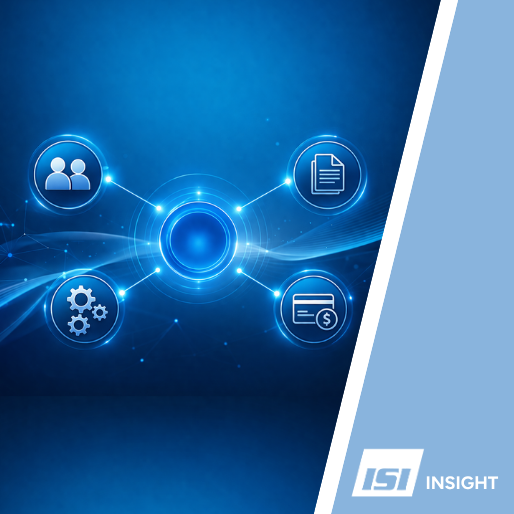


Claims leaders are rethinking how data, payments, and operational oversight flow between ecosystem partners and their core systems
For decades, insurers have worked with third-party administrators, independent adjusters, and specialized service vendors to support claims operations. What is evolving today is not the presence of these partners, but the scale and operational complexity of the ecosystem surrounding claims programs.
Across many lines of business, external partners now administer entire portfolios, provide specialized expertise, and deliver surge capacity during catastrophic events. As a result, significant portions of claims activity may occur outside the insurer’s immediate operational environment.
This shift requires claims leaders to reconsider how operational visibility, financial transactions, and governance extend across a distributed network of participants.
Increasingly, the challenge is not simply managing claims, but coordinating the broader ecosystem responsible for delivering claim outcomes.
Operational Complexity at Ecosystem Scale
As insurers expand their use of TPAs and external claims partners, operational friction points can emerge:
- Manual ingestion of bordereaux and partner reporting data.
- Limited visibility into externally administered claims activity.
- Reconciliation of transactions across multiple systems.
- Coordination of payments across brokers, vendors, and service providers.
- Administrative effort tied to managing partner reporting cycles.
Individually, these issues are manageable. At scale, however, they can create operational drag.
Claims teams may spend increasing effort reconciling partner activity rather than focusing on complex claim resolution, customer engagement, and operational oversight.
For many insurers, the challenge is not whether to work with external partners, but how to maintain alignment across an expanding partner ecosystem.
Supporting Ecosystem Reporting Models
Most insurer–TPA relationships rely on periodic reporting cycles. Monthly bordereaux submissions and scheduled data exchanges remain a practical way to track externally administered claims activity.
As partner networks expand, the effort required to ingest, reconcile, and act on that information can grow significantly. Many insurers are therefore looking to integrate externally administered claims data more directly into their core systems.
When partner data flows directly into the operational environment, insurers can:
- Improve visibility across internally and externally administered claims.
- Reduce manual handling of partner reporting data.
- Streamline reconciliation and operational oversight.
- Align claims activity more closely with financial workflows.
The goal is not to change how insurers work with ecosystem partners, but to ensure that longstanding reporting models continue to function efficiently as claims environments become more dynamic and complex.
Payments in a Multi-Participant Environment
Payments introduce another layer of complexity within ecosystem-driven claims operations.
Claims workflows often involve multiple financial participants, including service providers, brokers, legal representatives, and other external partners.
Coordinating payments across these stakeholders can create operational friction when claims activity and financial processing occur across different systems. In many organizations, this coordination still requires manual effort from claims teams.
Insurers that streamline payment coordination across their ecosystem can:
- Reduce administrative effort tied to payment processing.
- Improve financial transparency across claims transactions.
- Accelerate settlement timelines for partners and policyholders.
- Allow claims teams to focus more on complex claim management.
Payment coordination therefore becomes an important operational capability rather than simply a back-office function.
Greater Visibility into Reinsurance Recoverables
When claims administered by external partners are handled outside the core platform, key data points required to identify treaty attachment and recoverables may not be immediately visible, increasing the risk of recovery leakage.
Bringing these claims into the core system with structured data improves visibility into reinsurance participation. This becomes particularly important during catastrophic events, when insurers must quickly assess treaty attachment across large claims volumes.
Supporting the Ecosystem Model
Within ISI Core, new capabilities simplify how insurers manage data and financial activity across an expanding claims ecosystem, including:
- Structured ingestion of claims bordereaux, allowing externally administered claims data to be submitted into the core platform where transactions can be processed and reconciled.
- Integration with ISI Core analytics, enabling externally administered claims to be analyzed alongside internally handled claims for improved operational visibility and oversight.
- Improved visibility into reinsurance participation, supporting accurate treaty attachment and recovery management.
- Multi-party payment capabilities, allowing insurers to coordinate payments across brokers, vendors, and service providers within the claims workflow.
- Reduced administrative workload for claims teams, minimizing manual reconciliation and payment coordination.
- Operational scalability, enabling insurers to support a growing ecosystem of partners without proportionally increasing claims staff.
By supporting these capabilities directly within the core system, insurers can maintain operational oversight and allow claims teams to focus more on complex claim management and customer outcomes.
Implications for Leadership
For claims and operational leaders, the question is no longer simply how to optimize internal claims processes. Increasingly, it is about how to manage and integrate a broader network of participants without introducing operational friction.
As insurers expand their use of specialized partners and service providers, the ability to coordinate this ecosystem effectively will become a defining capability of claims organizations.